
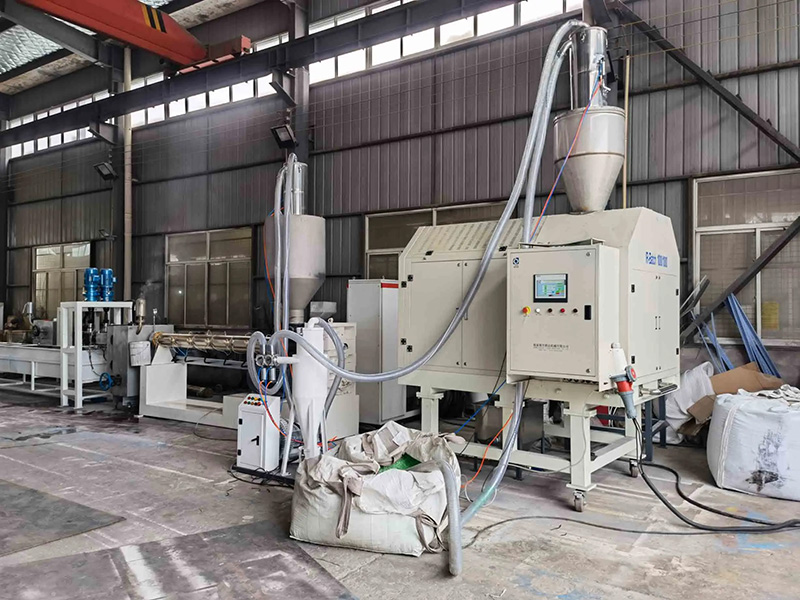
In response to the growing global demand for effective waste management and sustainable recycling practices, plastic shredders have become an essential tool for plastic producers and recyclers alike. These machines play a critical role in breaking down bulky plastic materials into manageable sizes that can be further processed for recycling or repurposing. With advancements in technology and design, the market now offers shredders that combine simplicity, stability, and efficiency, catering to both large-scale industrial operations and smaller recycling businesses.
A leading manufacturer in this sector, based in Zhangjiagang, has been at the forefront of plastic recycling machinery since 1998. The company’s extensive experience and dedication to innovation have resulted in a range of plastic shredding machines designed to meet the specific needs of the industry. Their focus is on creating equipment that minimizes operational complexity while maximizing consistent output, which is crucial for producers and recyclers aiming to streamline their production lines.
### The Role of Plastic Shredders in Recycling
Plastic shredders serve as the initial stage in most recycling processes. By reducing the size of plastic waste, these machines help facilitate easier handling, sorting, and further treatment like washing, melting, or pelletizing. Proper shredding enhances the efficiency of subsequent processing steps and contributes to the overall quality of recycled plastic products.
In industrial settings, where large volumes of plastic waste are handled daily, shredders must deliver reliable performance over long operating hours. This necessitates robust design, ease of maintenance, and adaptability to various plastic types, ranging from rigid containers to flexible films.
### Designing for Simplicity and Stability
One of the standout features of the shredders developed by manufacturers like the aforementioned Zhangjiagang company is their focus on simplicity without sacrificing functionality. By streamlining machine operation, users can achieve stable production rates with minimal training or technical expertise. This approach addresses a common challenge in the recycling sector, where operators often come from diverse backgrounds and may lack specialized skills.
Moreover, stable production is vital for aligning with processing schedules and meeting delivery deadlines. Equipment that requires frequent adjustments or suffers downtime significantly impacts productivity and profitability. Therefore, the engineering behind these shredders emphasizes durable components and user-friendly controls, ensuring machines perform reliably under various conditions.
### Tailoring Equipment for Plastic Producers and Recyclers
Plastic producers and recyclers have overlapping but distinct requirements when it comes to shredding equipment. Producers, who often deal with production offcuts, defective products, or trim waste, require shredders that can integrate smoothly into their manufacturing lines. The need here is for machines that not only handle materials efficiently but also maintain consistent throughput to avoid bottlenecks.
Recyclers, on the other hand, often face a wider range of material inputs with varying sizes, shapes, and contamination levels. Their shredders must be versatile enough to process this mixed plastic waste into uniform flakes or pellets suitable for resale or remanufacture.
The company’s dedication to addressing these varied needs is reflected in their customizable machine options and ongoing product development. By supporting their clients with tailored solutions and responsive after-sales service, they help maximize the efficiency and economic viability of plastic recycling operations.
### Environmental and Economic Benefits
Efficient plastic shredding contributes not only to operational efficiency but also to broader environmental goals. By facilitating more effective recycling, these machines help reduce the volume of plastic that ends up in landfills or the natural environment. Recycling plastic conserves natural resources and reduces energy consumption compared to producing virgin materials.
From an economic standpoint, retaining material value within the production cycle through recycling creates cost savings and new revenue streams. High-quality shredding equipment ensures that plastic waste is prepared optimally for recycling markets, improving the competitiveness of recycled plastic products.
### Industry Outlook and Innovation
As global awareness of plastic pollution intensifies, governments and companies worldwide are adopting stricter regulations and sustainability targets. This trend drives increased investment in recycling technologies, including shredders capable of handling new types of plastics and complex waste streams.
Manufacturers in the plastic recycling machinery sector continue to innovate, integrating features like intelligent control systems, energy-efficient motors, and modular designs. These advancements enhance machine performance and provide operators with valuable data for process optimization.
The company from Zhangjiagang exemplifies this forward-looking approach by continuously refining their product line based on industry feedback and technological progress. Their commitment to developing simple, stable, and effective plastic shredders has earned them recognition as a trusted partner for plastic recycling enterprises globally.
### Conclusion
Plastic shredders are indispensable tools for anyone involved in plastic production and recycling. Their ability to convert diverse plastic waste into reusable forms supports a circular economy and contributes positively to environmental conservation. Companies with decades of expertise in designing user-friendly, reliable shredders play a critical role in advancing sustainable waste management practices.
By focusing on what matters most—easy operation and stable production—leading manufacturers enable plastic producers and recyclers to achieve greater efficiency and profitability. As the industry evolves, the demand for such well-engineered shredding solutions is set to rise, supporting global efforts to reduce plastic pollution and promote recycling on a wider scale.